Logistics Warehouse: Types, Requirements and Costs (2026)
What sets a logistics warehouse apart from an industrial one, available types, technical specs and rents in Portugal in 2026.
The logistics warehouse is no longer a simple shed where pallets are stacked. With Portuguese e-commerce worth 12.9 billion euros in 2025, a 6.7% increase on the previous year (ECO, 2025), pressure on the supply chain has never been higher. There are already 5.5 million online shoppers in Portugal, 68.4% of whom demand home delivery, and Generation Z raises the bar: 10.5% want same-day delivery and 13.6% want it in under two hours.
The result? Demand for state-of-the-art logistics warehouses has surged, while supply remains constrained. Nationally, only 3.02% of spaces are available, and in the Lisbon Metropolitan Area that figure drops to 2.76% (Savills, 2026). If you are planning a logistics operation or rethinking your current space, this guide explains the types of warehouse, technical requirements and real costs in 2026.
Logistics Warehouse Versus Industrial Warehouse
Before searching for space, it is worth distinguishing the two concepts. An industrial warehouse typically serves manufacturing, assembly or long-term raw material storage operations. A logistics warehouse, on the other hand, is designed for the continuous flow of goods: receiving, sorting, packing and dispatching in the shortest possible time.
| Criterion | Industrial Warehouse | Logistics Warehouse |
|---|---|---|
| Primary function | Production, assembly, long-term storage. | Receiving, sorting, fast dispatch. |
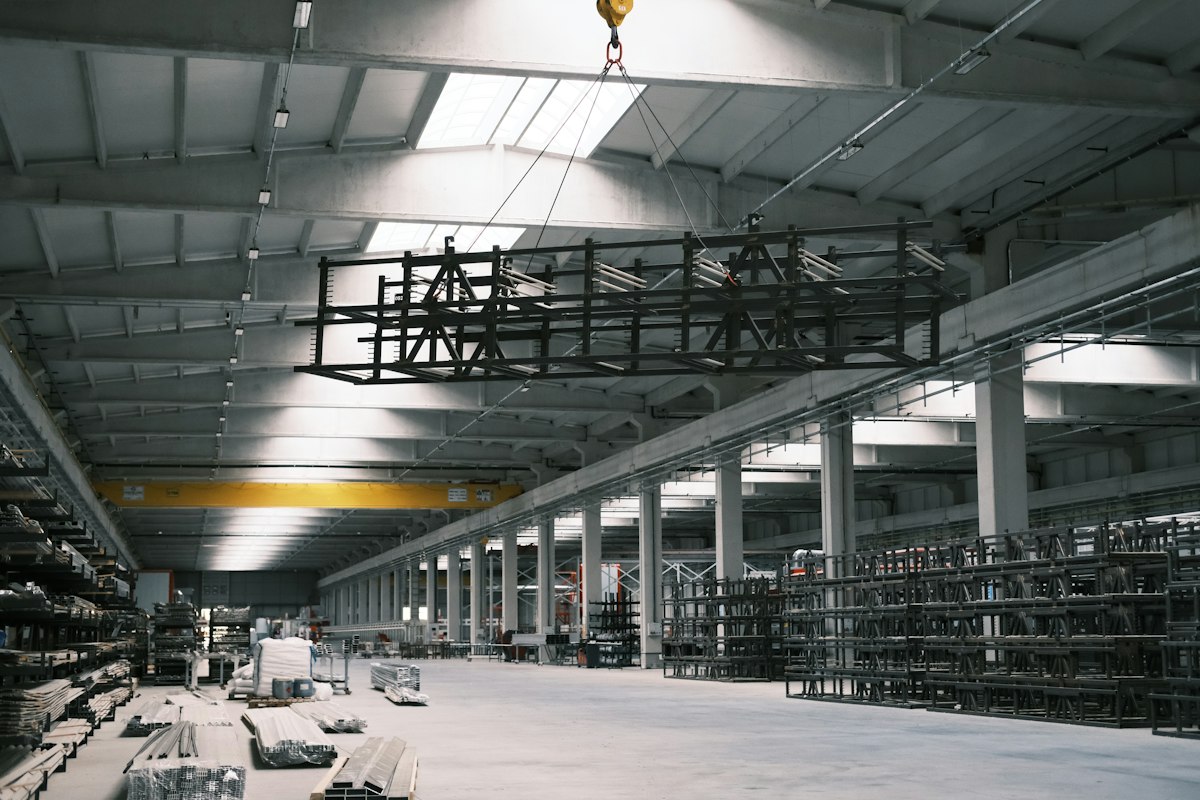
| Typical clear height | 6 to 8 m. | 10 to 12 m. |
| Loading docks | 1 per 1,500 to 2,000 m². | 1 per 500 to 1,000 m². |
| Floor capacity | 2 to 3 t/m². | More than 5 t/m². |
| Stock rotation | Low to medium. | High to very high. |
| Environmental certification | Optional. | BREEAM increasingly required. |
| Example user | Metalworking, carpentry. | 3PL operator, fulfillment center. |
In the Lisbon Metropolitan Area, many older warehouses fall into the industrial category. For logistics operations with current requirements, always confirm the clear height and number of docks before signing a lease.
For a more detailed analysis of the industrial market, see our guide on industrial warehouses in Lisbon.
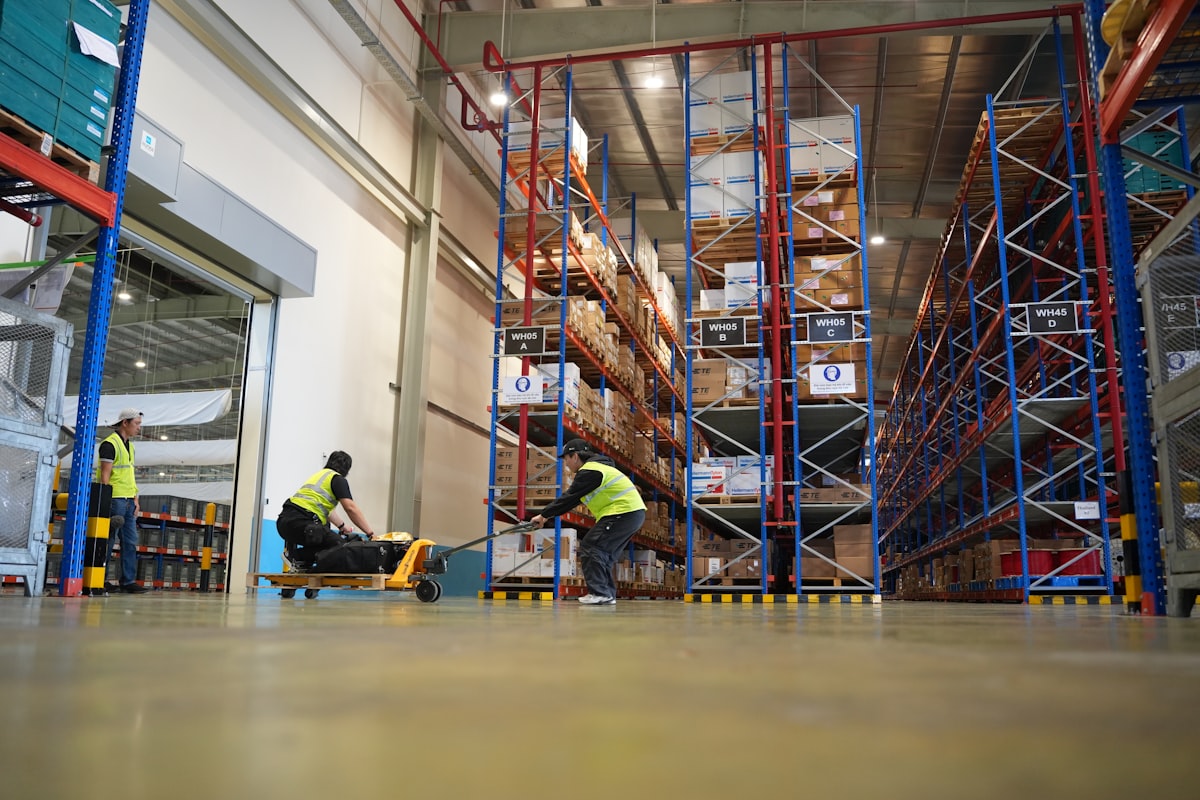
Types of Logistics Warehouses
Not all logistics warehouses serve the same purpose. Here are the six most common types (RAJA, 2025):
Regional Distribution Warehouse
Functions as a central hub that receives large volumes from suppliers and redistributes to stores or smaller centres. Typical areas range from 5,000 to 30,000 m², strategically located near motorways.
Fulfillment Center (E-Commerce)
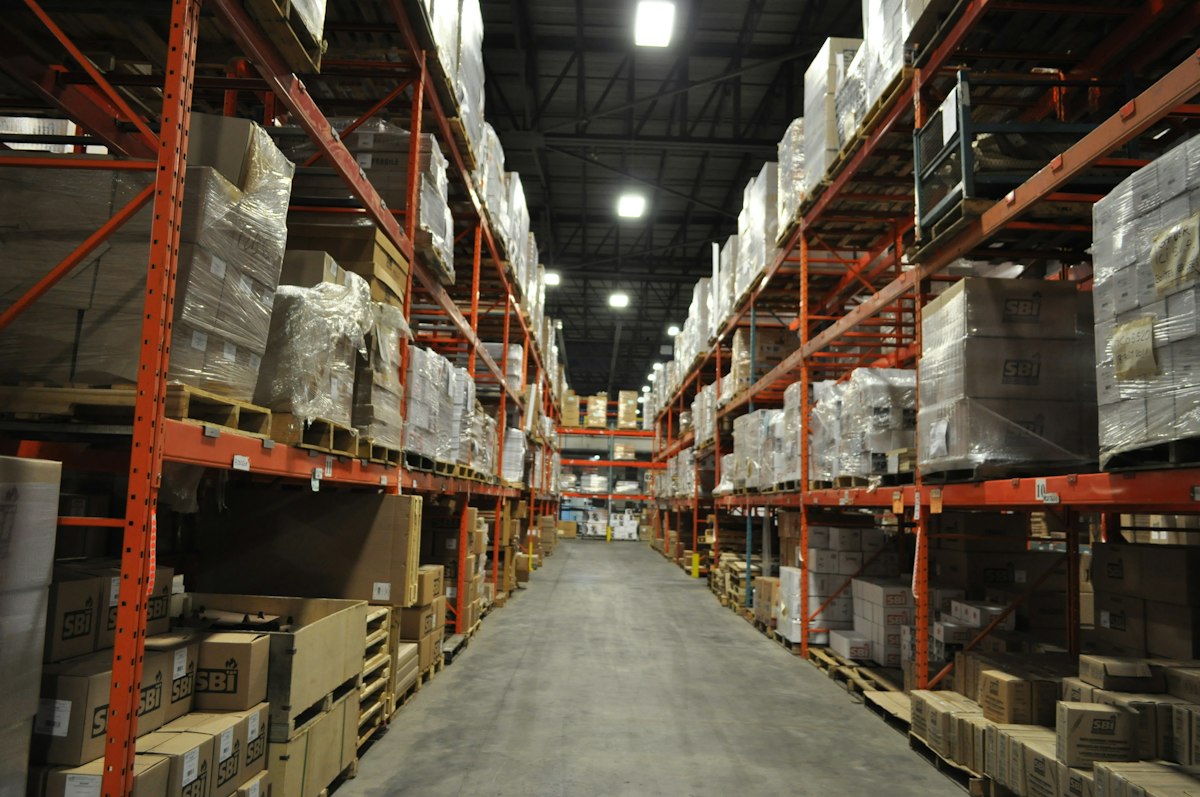
Optimised for processing individual orders in high volume. Includes picking, packing and returns zones, with advanced warehouse management systems (WMS). If you are looking for this type of space, see our article on e-commerce warehouses.
Cross-Dock
In this model, goods enter from one side of the building and leave from the other within a very short timeframe, with minimal or zero storage (Mecalux, 2025). It is ideal for perishable products or supply chains with highly predictable demand.
Cross-dock drastically reduces storage costs, but it requires precise coordination between suppliers and carriers. Before adopting this model, assess whether your daily volume justifies the investment in sorting systems.
Last-Mile and Micro-Fulfillment
Small urban spaces (500 to 5,000 m²) positioned close to the end consumer. They serve same-day or few-hour deliveries. DPD invested 30 million euros in a hub in Loures with a 405-metre crossbelt sorter capable of processing 10,000 parcels per hour (Hipersuper, 2026).
Cold Storage
Divided into chilled (0 to 10 °C) and frozen (minus 30 to 0 °C). Construction and operation are significantly more expensive, but demand is growing with the increase in online food shopping.
Automated Warehouse
Incorporates AS/RS (Automated Storage and Retrieval Systems), automated guided vehicles (AGV) and conveyor belts. Reduces labour dependency and increases picking accuracy, although it requires a significant upfront investment.
Need a logistics warehouse in Greater Lisbon?
We have different warehouse types — logistics, industrial and storage
Essential Technical Specifications
When evaluating a logistics warehouse, these are the specifications that determine whether the space is suitable for your operation:
| Specification | Grade B (Existing) | Grade A (New) |
|---|---|---|
| Clear height | 7 to 9 m. | 10 to 12 m. |
| Floor capacity | 3 to 4 t/m². | More than 5 t/m². |
| Loading docks | 1 per 1,500 m². | 1 per 500 to 1,000 m². |
| Column grid | Variable. | 22 x 22 m (minimum). |
| Fire protection | Extinguishers and hose reels. | ESFR sprinklers, automatic detection. |
| Environmental certification | Rare. | BREEAM Very Good or above. |
| Lighting | Fluorescent. | LED with motion sensors. |
BREEAM certification is becoming a market requirement, not merely a differentiator. Major logistics operators and international retailers already demand at least a Very Good rating for new contracts.
The 22 x 22-metre column grid is essential for forklift circulation and for maximising storage capacity at height. If you need help calculating the ideal area, see our article on how to calculate warehouse area.
How Much Does a Logistics Warehouse Cost in Portugal
Logistics rents in Portugal have risen by approximately 40% since 2019, when prime values were around 3.50 euros per m²/month (Construir, 2026). In 2026, the landscape is as follows:
| Zone | Indicative Rent (€/m²/month) | Notes |
|---|---|---|
| Lisbon Prime (Zone 1). | 5.50 to 7.00. | Grade A spaces, virtually no available supply. |
| Loures / Prior Velho / Sacavém. | 6.00 to 10.00. | Good access to the A1 and CRIL, limited supply. |
| Alverca / Azambuja Corridor. | 4.50 to 6.00. | Main national logistics corridor. |
| Setúbal / Palmela. | 3.50 to 5.00. | Competitive alternative with access to the A2. |
| Porto / Maia / Valongo. | 4.00 to 5.50. | Maturing market, rents rising. |
The values above are reference rents for logistics spaces. Rents vary according to size, building quality and lease duration. For updated values by zone, see our price analysis by zone.
Investment in logistics and industrial real estate reached 148 million euros in 2025, a figure that exceeds the combined total of the two previous years (Hipersuper, 2026). In the Lisbon Metropolitan Area, the pipeline of new projects ranges from 360,000 to 590,000 m², but only 34% is already pre-leased, indicating developer confidence despite the current scarcity.
For a detailed analysis of values by municipality, see our guide on prices by zone.
Need Expert Help?
Durgesta assists you with all technical and legal documentation, condition negotiation, and personalised support
What Is Driving Demand
Three major forces explain the pressure on the logistics warehouse market in Portugal:
E-Commerce Acceleration
With 5.5 million online shoppers and a 12.9-billion-euro market (ECO, 2025), every retailer needs more logistics space, closer to the consumer and with the capacity to process individual orders. The demand for fast delivery is pushing demand towards urban areas such as Loures and Prior Velho.
Nearshoring
Portugal is positioning itself as a competitive alternative for European companies looking to relocate operations. Operating costs are 30 to 40% lower than in France or the United Kingdom, attracting Iberian and European distribution centres (Savills, 2026).
Supply Scarcity
With only 2.76% of spaces available in the Lisbon Metropolitan Area, those looking for space face few alternatives. Pipeline projects take 18 to 24 months to become operational, which keeps upward pressure on rents in the short term.
How to Choose the Right Logistics Warehouse
The choice depends on the type of operation. Use this checklist organised by profile:
Regional distribution:
- Proximity to road junctions (A1, CRIL, A2).
- Minimum clear height of 10 m for conventional racking with 5 or more levels.
- External manoeuvring area for articulated heavy goods vehicles.
- Sufficient dock levellers for the daily volume of dispatches.
Fulfillment and e-commerce:
- Floor capacity exceeding 5 t/m² (automation equipment is heavy).
- Dedicated returns zone (reverse logistics).
- Robust electrical connection for sorting systems and 24-hour lighting.
- Location enabling deliveries across the Lisbon Metropolitan Area in under 4 hours.
Last-mile and micro-fulfillment:
- Proximity to the urban centre (radius under 15 km).
- More compact areas (500 to 5,000 m²) with good road access.
- Schedule flexibility (night-time operations in mixed-use zones require attention to licensing).
Before deciding, visit the space with an operations manager. Details such as ramp gradient, column positioning and natural ventilation make a difference in day-to-day operations and are not always evident on technical plans.
Cold storage:
- Certified thermal insulation and redundant refrigeration system.
- Antechambers to minimise thermal losses during loading and unloading.
- Floor resistant to freeze-thaw cycles.
Cross-dock:
- Rectangular configuration with docks on both sides of the building.
- Large central sorting area, free of obstructions.
- Location next to a motorway with fast entry and exit access.
Frequently Asked Questions
A logistics warehouse is designed for the rapid flow of goods (receiving, sorting and dispatch), while an industrial warehouse primarily serves production, assembly or long-term storage operations. The differences are reflected in the clear height, number of loading docks and floor capacity.
In 2026, prime rents range from 5.50 to 7.00 euros per square metre per month. In areas such as Loures, Prior Velho and Sacavem, values range from 6 to 10 euros per square metre per month, depending on the quality of the space and the lease duration.
For modern operations, the recommended clear height is 10 to 12 metres. This height allows conventional racking with five or more levels to be installed, optimising storage volume per square metre of floor space.
A fulfillment center is a warehouse optimised for processing individual e-commerce orders in high volume. It includes specialised zones for picking, packing, labelling and returns management, typically supported by advanced warehouse management systems.
Cross-docking is a logistics model in which goods pass directly from the receiving dock to the dispatch dock, with minimal or zero storage. It makes sense when there is high daily volume, highly predictable demand and good coordination between suppliers and carriers.
It is not legally mandatory, but it is becoming a market requirement. Major logistics operators and international retailers demand at least a Very Good rating on new contracts, which directly influences the attractiveness and rental value of the property.
Durgesta manages warehouses in Loures, including Prior Velho and Sacavem, with rents between 6 and 10 euros per square metre per month. The spaces have good access to the A1 and CRIL, making them suitable for distribution, fulfillment and last-mile logistics operations in the Lisbon Metropolitan Area.
Ready to Get Started?
Define your requirements and find the warehouse that perfectly fits your operation. No surprises, no wasted time