Shared Warehouses: When Does It Make Sense to Split Space
Shared warehouses can cut costs by 30%. Learn about the models, legal framework in Portugal, and when splitting space pays off.
Most companies lease more space than they need "just in case," and end up paying for empty square meters for months. Shared warehouses solve this problem: instead of each company renting an entire space, two or more operations split the same building, reducing costs without losing autonomy.
This model is already worth over 8 billion dollars globally (Global Growth Insights, 2024). In Portugal, it is still an underexplored concept, but pressure from rising rents and limited space availability in the Lisbon Metropolitan Area are changing that.
What Are Shared Warehouses
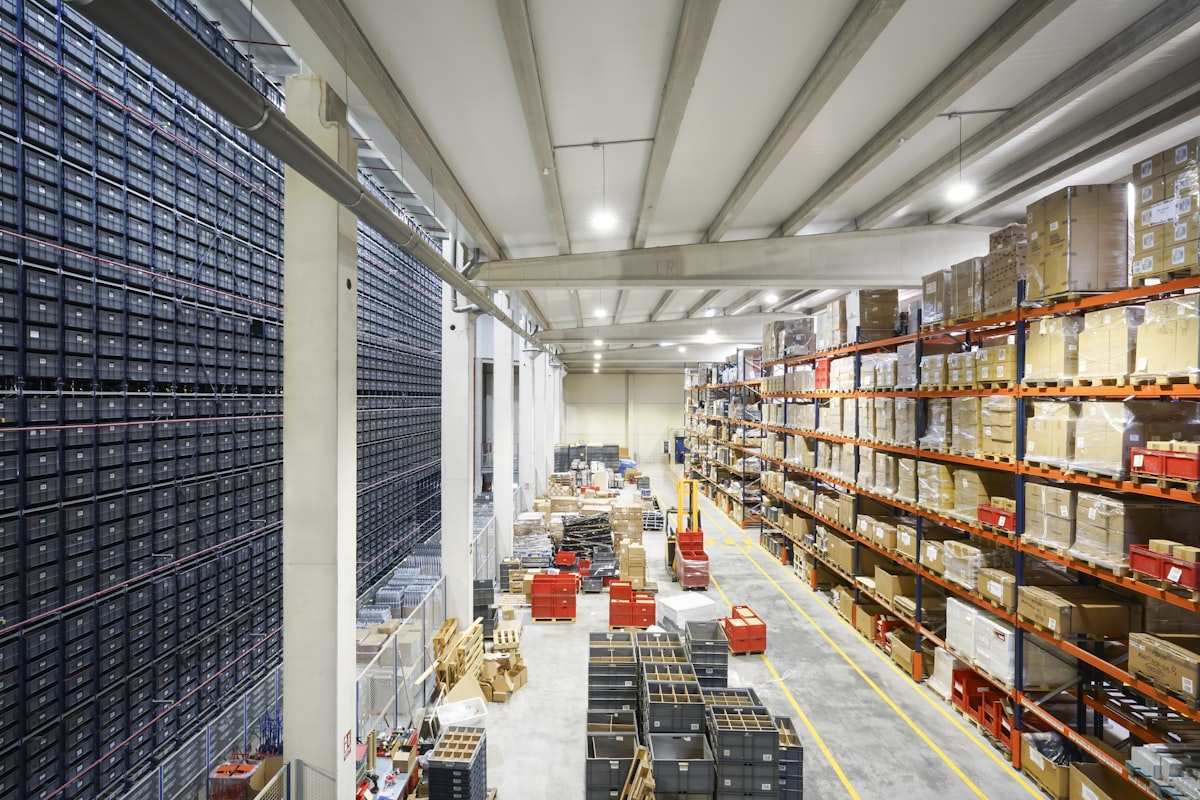
A shared warehouse is an industrial space where two or more companies operate simultaneously, each within their own designated zone. It is not self-storage (small boxes for personal goods) or office coworking. It is an operational logistics solution.
Companies maintain independent operations (their own inventory, staff, and schedules) but share the infrastructure: the building, loading docks, security, parking, and in some cases equipment such as forklifts.
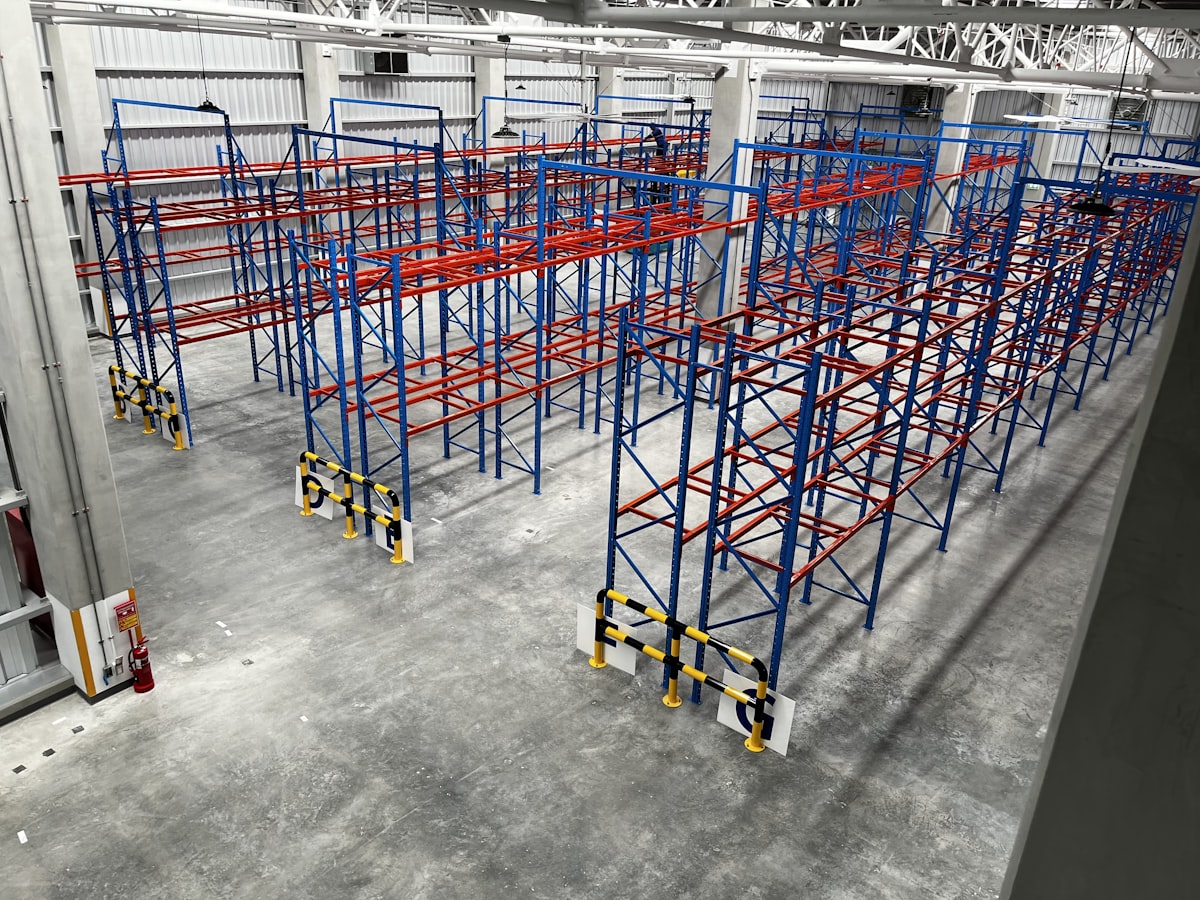
Each company occupies a physically designated zone with controlled access. Sharing refers to the building infrastructure, not to each occupant's inventory or operations.
The concept works similarly to office coworking: instead of leasing an entire floor, each company occupies the area it needs and splits fixed costs.
Why It Is Growing: Market Numbers
The global shared warehousing market reached 8.56 billion dollars in 2024 and is projected to grow to 17.31 billion by 2034 at 7.3% per year (Global Growth Insights, 2024). Europe represents 27% of this market.
The on-demand segment is growing even faster: from 16.93 billion (2025) to 34.94 billion by 2030 at 15.9% per year (Mordor Intelligence, 2025).
In Portugal, the indicators explain why:
- Prime rents in the Lisbon Metropolitan Area: €5.50 to €5.60/m2/month (Cushman & Wakefield, Q3 2025).
- Availability: only 4.2% of spaces are available, meaning very limited supply.
- Logistics investment: €299 million in 2025, up 18% from 2024 (RealEstate-Lisbon, 2026).
- New supply pipeline: 584,300 m2 planned over the next 3 years, but insufficient for demand.
With limited supply and rents rising 3 to 5% annually, sharing space has moved from a last resort to a deliberate strategy.
Who Should Consider Sharing Space
Warehouse sharing is not for every company. It works best for:
- E-commerce startups and SMEs: with volumes of 100 to a few thousand orders per month, a full warehouse is not justified. If you are at this stage, our e-commerce warehouse guide helps dimension the operation.
- Seasonal businesses: companies with peaks during Christmas, Black Friday, or summer that need extra space only for a few months.
- Companies expanding into Lisbon: those entering the market for the first time and wanting to test operations before committing to a long-term lease.
- Small wholesalers and distributors: with limited stock, leasing 1,000 m2 when 300 m2 will do does not make sense.
- Companies in transition: growing into larger space or downsizing operations.
If your operation uses less than 50% of the space you lease for more than 3 months per year, sharing could save between 20% and 35% of your logistics costs.
Looking for a shared warehouse in Greater Lisbon?
We have flexible industrial spaces you can share or subdivide
How Much Can You Save: Real Costs in the Lisbon Area
The concrete numbers in the Lisbon Metropolitan Area:
| Scenario | Area | Rent/month | Cost per company |
|---|---|---|---|
| Individual warehouse (prime) | 500 m2 | €5.50/m2 | €2,750 |
| Shared warehouse (Loures) | 1,000 m2 split by 2 | €8.00/m2 | €4,000 each |
| Shared warehouse (Loures) | 1,000 m2 split by 3 | €8.00/m2 | €2,667 each |
In the three-way split scenario, each company pays about €2,667/month for a zone in a 1,000 m2 warehouse, instead of €5,500 for an individual 1,000 m2 space. That is a significant saving.
But rent is only part of the equation. Sharing also splits:
- Security and surveillance: alarm systems, CCTV, and patrols.
- Utilities: common area electricity, water, waste.
- Maintenance: common area cleaning, gate and dock maintenance.
- Building insurance: the cost of the property policy is shared.
International studies indicate reductions of up to 30% in storage costs and up to 35% in total logistics expenses with sharing models (Cadre Technologies, 2025).
Sharing Models: Which One Applies
There are three main models, each with different advantages and complexity:
1. Multi-tenant (landlord divides the space)
The landlord divides the building into independent units, each with a direct lease contract. Companies share only common areas (docks, parking, access routes).
- Advantages: independent contracts, no subletting complexity, each company negotiates directly with the landlord.
- Limitations: requires the landlord to invest in space division.
2. Subletting (tenant shares)
The main tenant sublets part of their space to another company. Requires written landlord authorization.
- Advantages: flexible, quick to implement.
- Limitations: dependent on the main contract, rent ceiling (plus 20%), greater legal complexity.
3. On-demand (digital platforms)
Platforms like Flexe or Stord connect companies with available space to companies needing temporary storage. Still underdeveloped in Portugal.
- Advantages: maximum flexibility, no long-term commitment.
- Limitations: no meaningful presence in the Portuguese market.
The multi-tenant model is the cleanest from a legal standpoint: each company has a direct contract with the landlord, with no need for subletting authorization or rent ceilings. It is the recommended option for those who want to avoid complexity.
Legal Framework in Portugal
If you opt for subletting, these are the rules:
- Mandatory authorization: subletting requires written landlord authorization (Art. 1088 of the Civil Code) (Informador Fiscal).
- Notification: the tenant must inform the landlord of the subtenant's identity within 15 days.
- Rent ceiling: the amount charged to the subtenant cannot exceed the original rent plus 20%, unless the landlord agrees otherwise (Art. 1062 of the Civil Code) (CGD, Saldo Positivo).
- Dependency: the sublease automatically terminates if the main contract ends, for any reason.
- Default term: when not stipulated, the non-residential lease term defaults to 10 years (NRAU).
Subletting without written landlord authorization constitutes grounds for contract termination. If you are considering sharing your space, obtain formal authorization before proceeding.
Need Expert Help?
Durgesta assists you with all technical and legal documentation, condition negotiation, and personalised support
VAT, Invoicing, and Taxes
Taxation depends on the type of shared space:
- Bare walls (no equipment or services): the lease is VAT-exempt under Art. 9(29) of the CIVA (OCC, 2025).
- Equipped or serviced space: if the lease includes equipment, security, Wi-Fi, space management, or other utilities, it is classified as a service provision and subject to 23% VAT.
In practice, most shared warehouses include common services. This means the tenant receives an invoice with VAT, which they can deduct if under the standard VAT regime.
Subletting income must be declared by the sublessor: for individuals on Anexo F (property income) and for companies as normal revenue with VAT obligations.

Insurance and Responsibilities
In a shared space, responsibilities must be clearly defined:
- Building insurance: the landlord's responsibility. Covers the structure, not tenant operations.
- Liability insurance: each company must carry its own. Covers damages caused to third parties during operations.
- Goods insurance: covers stored stock. Each company insures their own goods.
- Responsibility zones: the contract must physically delineate each tenant's zone, with clear responsibilities for common areas.
Regarding occupational health and safety (SST), Law 102/2009 requires companies operating in the same space to share information about risks and hazards. Multiple companies can share common SST services through a written agreement, reducing costs (ACT).
For a full analysis of required coverage, see our article on industrial warehouse insurance.
In a shared warehouse, a coordinated emergency plan among all occupants is mandatory. Define evacuation routes, meeting points, and responsible persons per zone.
Best Practices for Successful Sharing
Successful sharing arrangements have clear rules from day one:
- Written agreement: define zones, access hours, common areas, cleaning, maintenance, and shared costs.
- Separate inventory management: each company should have its own system (barcode or RFID) to avoid stock confusion.
- Loading dock scheduling: with two or more occupants, docks need defined schedules to avoid congestion.
- Access control per company: separate cards, codes, or biometrics for each operation.
- Coordination meetings: at least monthly, to resolve operational issues before they become problems.
- Exit clauses: clear notice periods and termination conditions for each party.
If you are looking for affordable warehouses in the Lisbon area, the shared option may be the way to access quality spaces without stretching the budget.
Frequently Asked Questions
A shared warehouse is an industrial space where two or more companies operate simultaneously, each in their own designated zone, splitting infrastructure costs such as security, utilities, and maintenance.
Savings range from 20% to 35% of total logistics costs. In a concrete scenario in the Lisbon area, 3 companies splitting a 1,000 m2 warehouse in Loures pay about 2,667 euros each per month, compared to 5,500 euros for an individual 1,000 m2 space.
Yes, provided you have written landlord authorization (Art. 1088 of the Civil Code). The amount charged to the subtenant cannot exceed the original rent plus 20%, unless the landlord agrees otherwise.
The multi-tenant model, where the landlord divides the space and makes direct contracts with each company, is the simplest. It avoids subletting complexity and each company negotiates directly with the property owner.
The landlord covers building insurance. Each company must carry its own liability insurance and goods insurance to cover their stored items and any damages to third parties.
It depends. Bare-walls leasing is VAT-exempt. If the space includes equipment or services (security, Wi-Fi, management), it is classified as a service provision and subject to 23% VAT, which the tenant can deduct.
E-commerce startups, seasonal businesses, companies expanding into Lisbon, small wholesalers and distributors, and companies in transition that use less than 50% of their leased space for more than 3 months per year.
Looking for a Warehouse to Rent?
We have industrial warehouses available for lease in Greater Lisbon. Competitive prices and flexible contracts