Warehouse Fire Safety: Prevention, Equipment and Costs
Guide to fire safety in industrial warehouses: SCIE risk categories, mandatory equipment, costs and insurance impact in Portugal.
A warehouse fire can destroy an entire business in minutes. Beyond the loss of stock and equipment, there are operational shutdowns, liability claims and, in the worst cases, injuries or fatalities. In Portugal, fire safety in industrial buildings is governed by the SCIE regime (Seguranca Contra Incendios em Edificios), which sets clear obligations for both landlords and tenants.
This guide covers the four risk categories that apply to warehouses, the equipment you are required to install, how much it costs and how good fire safety practice can significantly reduce your insurance premiums. Whether you are about to sign a lease or already operating in a warehouse, understanding these rules is essential to protect your people, your assets and your bottom line.
The Four Risk Categories for Warehouses
Portuguese fire safety law classifies industrial and storage buildings under Use-Type XII (UT-XII). The risk category depends primarily on the thermal load density, measured in megajoules per square metre (MJ/m2), along with factors such as building height and number of floors below ground.
| Category | Thermal Load Density | Typical Example |
|---|---|---|
| 1st | Up to 500 MJ/m2 | Light storage, empty or low-density goods |
| 2nd | 501 to 5,000 MJ/m2 | General merchandise, packaged products |
| 3rd | 5,001 to 15,000 MJ/m2 | Plastics, textiles, chemicals |
| 4th | Above 15,000 MJ/m2 | Flammable liquids, high-density combustibles |
The higher the category, the stricter the requirements. A 1st category warehouse needs only basic extinguishers and signage, while a 4th category facility must have automatic suppression systems, dedicated fire compartments and a full emergency plan with annual drills.
The thermal load calculation considers the type and quantity of stored materials, not just the building size. A small warehouse storing solvents may fall into a higher category than a large one holding empty pallets. A certified SCIE technician can perform the assessment for you.
Before signing any lease, it is worth checking the building's existing fire safety classification. A warehouse site visit should always include a review of the fire safety documentation and installed systems.
Mandatory Equipment and How Much It Costs
The specific equipment required depends on your risk category, but certain items are mandatory across all categories. Here is a breakdown of the most common fire safety equipment and typical costs in Portugal.
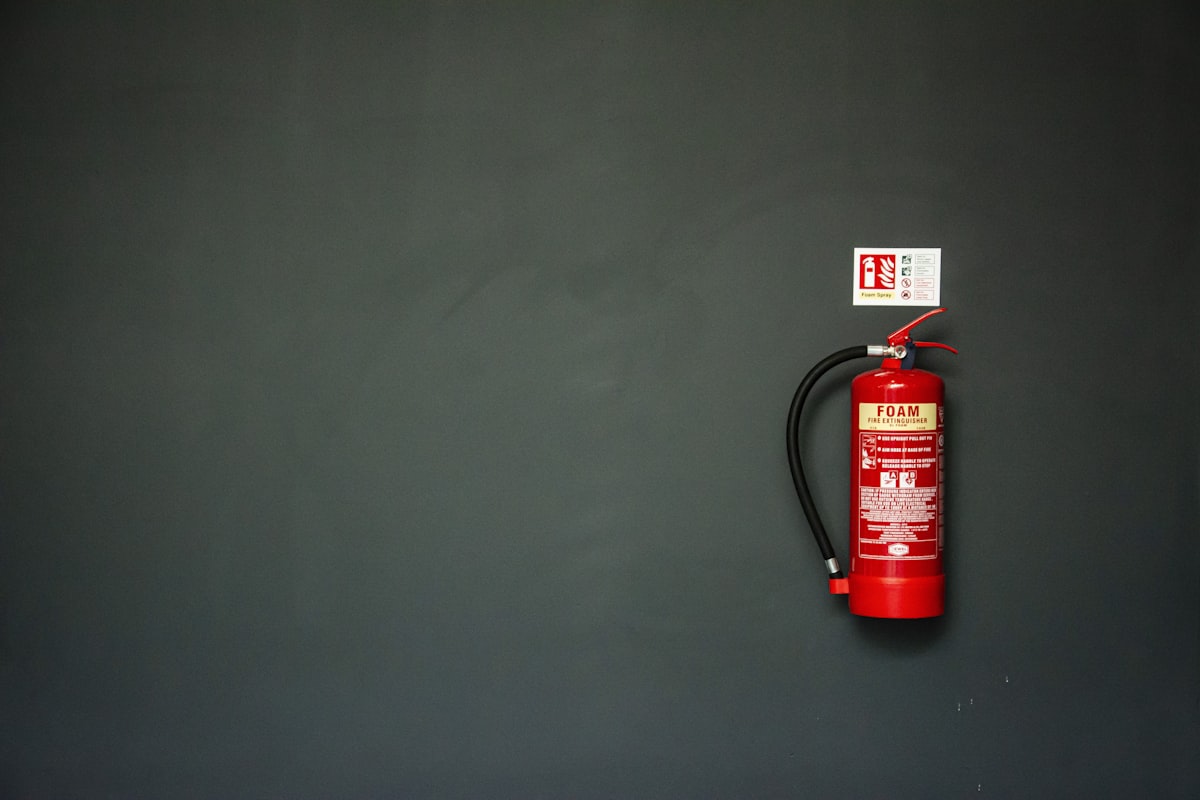
Fire extinguishers are the baseline. Every warehouse needs ABC-rated dry powder extinguishers, typically 6 kg units, placed at intervals defined by regulation. Each unit costs around 45 euros, and annual inspection runs about 15 to 20 euros per extinguisher.
Fire detection systems become important from the 2nd category onward. A basic automatic detection system with smoke detectors, a control panel and manual call points costs around 2,000 euros for a medium-sized warehouse. Larger or more complex layouts can push this to 5,000 euros or more.
Fire doors are required wherever fire compartmentation is needed. A certified fire-resistant door costs between 400 and 1,800 euros depending on the fire rating (30, 60 or 120 minutes) and the door dimensions.
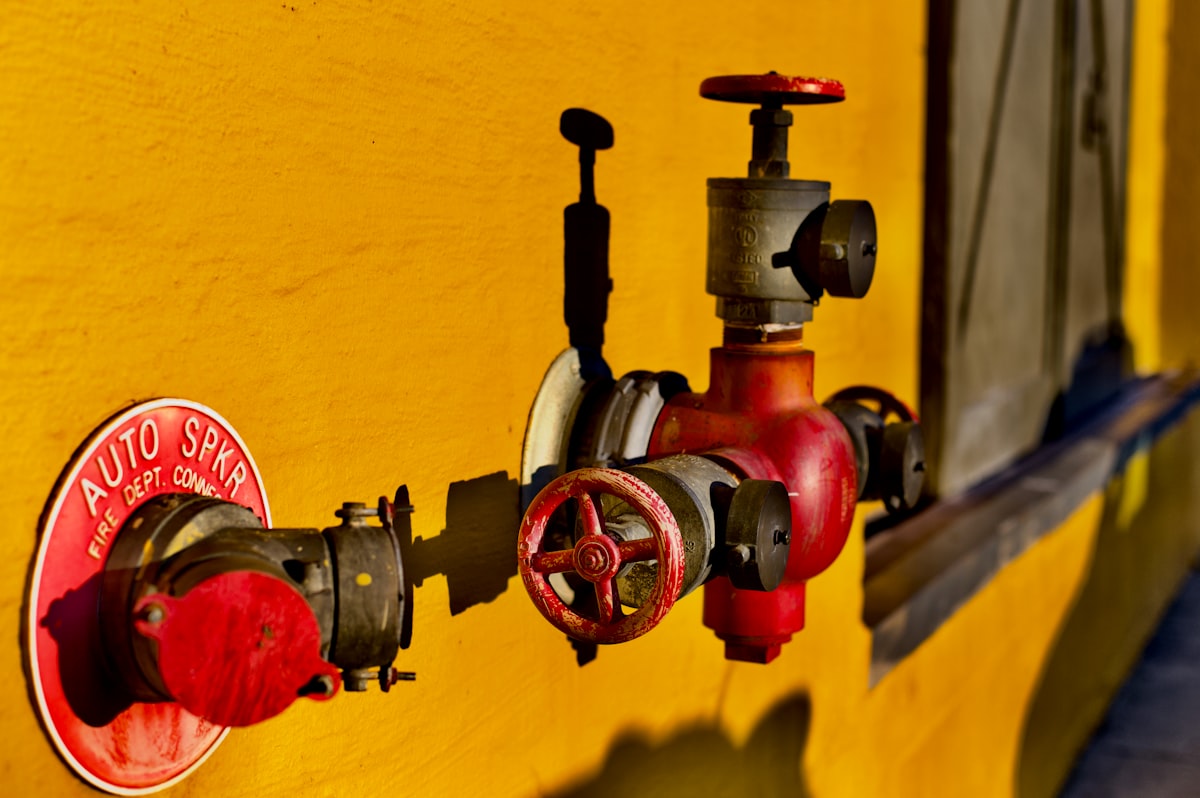
Sprinkler systems are mandatory from the 3rd category. Installation costs vary widely based on warehouse size, ceiling height and water supply, but a typical system for a 1,000 m2 warehouse starts at around 15,000 to 25,000 euros.
All fire safety equipment must be inspected and maintained on a regular schedule. Expired extinguishers or a faulty detection panel can void your insurance coverage entirely and expose you to heavy fines during ANEPC inspections.
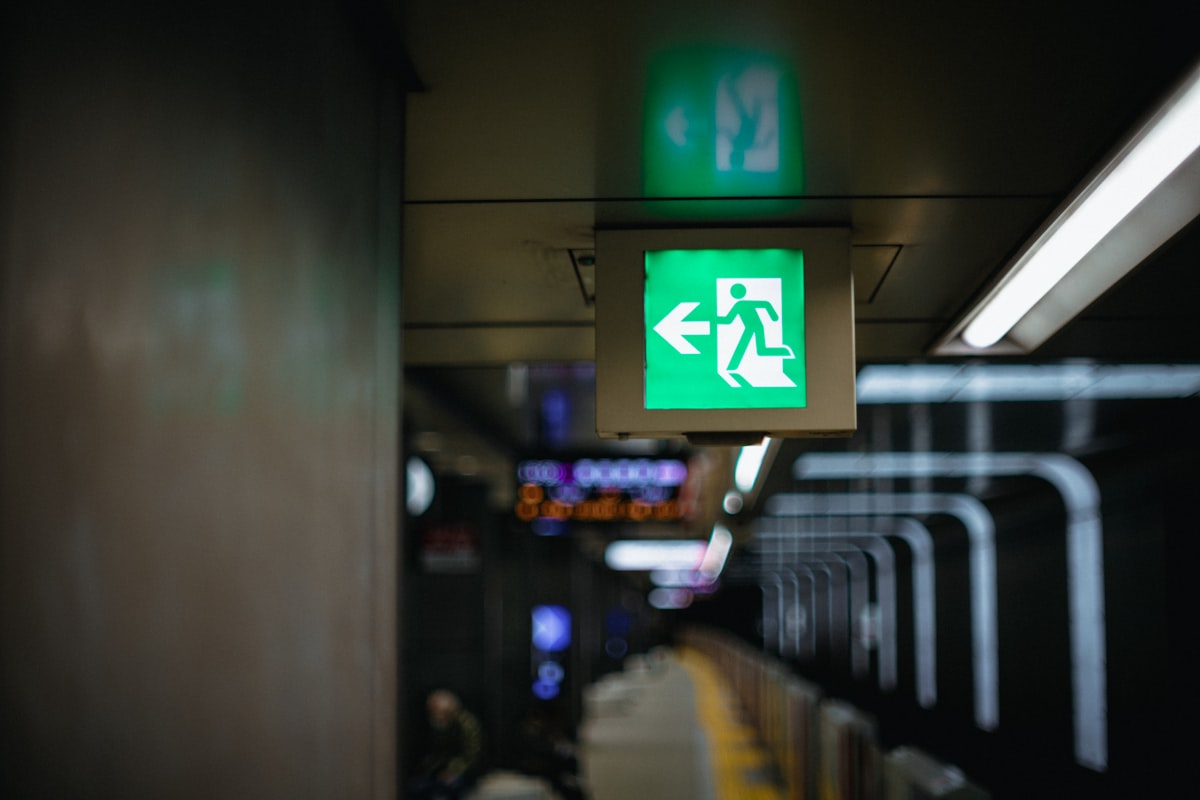
Emergency lighting and signage are required in all categories. Photoluminescent exit signs and emergency lighting units ensure safe evacuation when power fails. Budget around 500 to 1,500 euros depending on the number of exits and the warehouse layout.
For a 1st or 2nd category warehouse of moderate size, a complete fire safety installation typically ranges from 3,000 to 8,000 euros. For 3rd and 4th category buildings with sprinklers, expect 20,000 euros and above. These figures should be factored into your overall occupancy costs, much like the electricity bill and other operational expenses.
Self-Protection Measures: What the Law Requires
Beyond physical equipment, Portuguese law requires a set of self-protection measures that increase in complexity with the risk category. These are organisational and procedural obligations, not just hardware.
Records and registries are mandatory for all categories. Every warehouse must maintain up-to-date records of fire safety equipment, inspections, maintenance activities and any incidents. These records must be available for inspection by ANEPC (the national civil protection authority) at any time.
Prevention plan is required from the 2nd category onward. This document identifies all fire risks in the facility, establishes preventive procedures and assigns responsibilities to specific staff members.
Internal emergency plan is also required from the 2nd category. It details evacuation procedures, assembly points, communication protocols and the roles of the internal emergency team.
Even if your warehouse falls into the 1st category, commissioning a professional fire safety audit is a smart investment. It identifies vulnerabilities you might miss and provides a roadmap for improvements that can reduce insurance costs.
Fire drills follow a mandatory schedule. Buildings in the 2nd category must conduct evacuation drills every two years. For 3rd category, the frequency increases, and 4th category warehouses must run drills annually. All drills must be documented and records kept for inspection.
Fire safety delegate or officer must be appointed in higher categories. This person is responsible for coordinating all self-protection measures, liaising with ANEPC and ensuring the emergency plan stays current.
Failing to implement these measures carries significant penalties. ANEPC can issue fines and, in serious cases, order the temporary closure of the facility until compliance is achieved.
Looking for the Ideal Warehouse?
Explore our selection of industrial warehouses in Greater Lisbon. Spaces with verified documentation, ready for your operation.
Prevention: The Most Common Causes and How to Avoid Them
Understanding why warehouse fires start is the first step to preventing them. Data from Portuguese fire services and industry reports consistently point to four main causes.
Electrical faults are the leading cause of warehouse fires. Overloaded circuits, damaged wiring, poorly maintained electrical panels and improvised connections are all common culprits. Prevention starts with a professional electrical inspection before occupying any warehouse and regular maintenance thereafter. This is one of the key items to verify during industrial licensing.
Improper storage of combustible materials is the second major cause. Flammable liquids, aerosols, packaging materials and even large accumulations of cardboard can turn a small ignition into an uncontrollable blaze. Proper segregation, ventilation and adherence to the thermal load limits for your category are essential.
Hot works such as welding, cutting and grinding generate sparks and intense heat. These activities require a formal hot work permit system, fire watch procedures and the removal or protection of nearby combustibles. Many warehouse fires in Portugal have been traced to unauthorised or unsupervised hot works.
Arson remains a persistent risk, particularly for warehouses in isolated industrial zones. Perimeter security, CCTV, adequate exterior lighting and alarm systems all serve as deterrents. Comprehensive warehouse security is an investment that protects against both theft and fire.
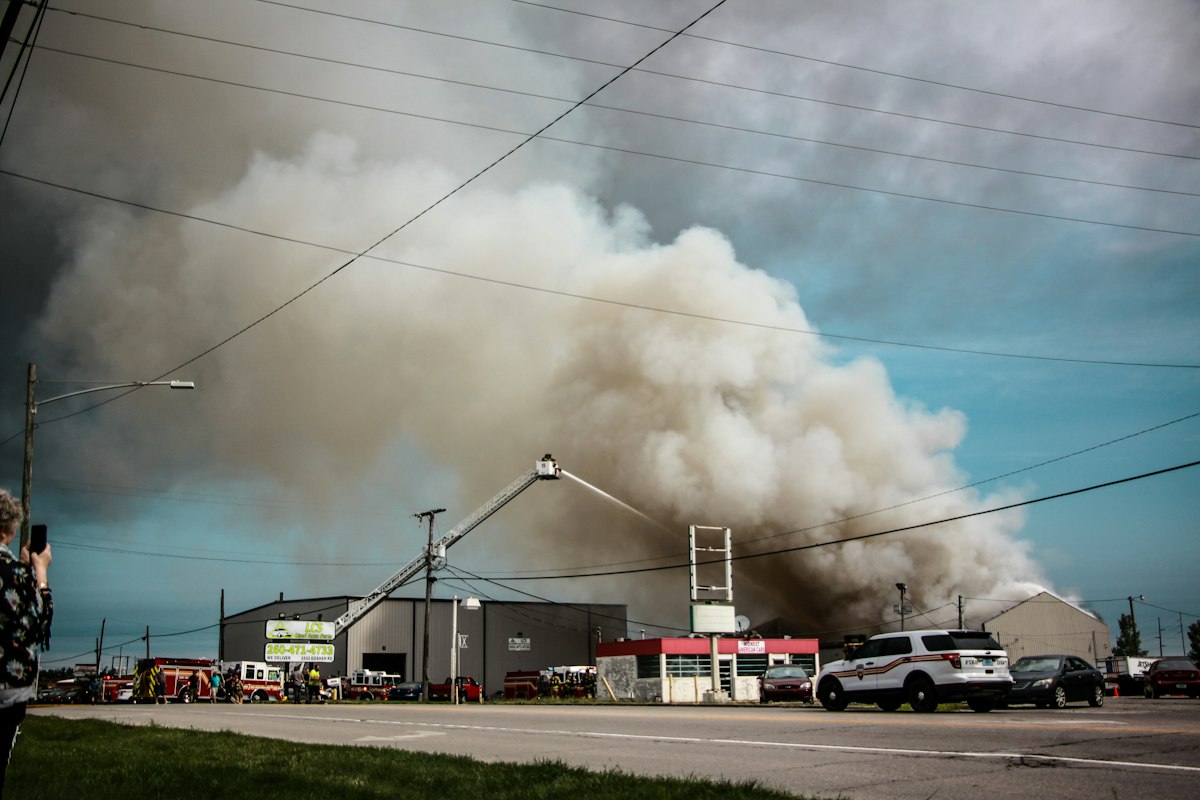
In July 2024, a fire in the Ramalde industrial zone in Porto destroyed over 9,000 square metres of warehouse space. In Coimbra, a blaze spread across four to five warehouses and required more than 150 firefighters to bring under control. These incidents underscore the speed at which warehouse fires escalate and the importance of prevention and early detection.
A simple but effective daily routine includes checking that fire exits are unobstructed, electrical panels are closed and undamaged, combustible waste is removed and all fire safety equipment is accessible. These habits cost nothing and prevent the majority of incidents.
Insurance Impact: How Much You Can Save
Fire safety is not just a legal obligation. It has a direct and measurable impact on your insurance premiums. Portuguese insurers assess fire risk when pricing multi-risk and industrial policies, and certified fire safety systems can unlock significant discounts.
Ageas, one of the largest insurers in Portugal, offers discounts of up to 15 percent on industrial multi-risk policies for buildings with certified fire detection and suppression systems. The discount applies when the systems are installed by certified companies and maintained according to the regulatory schedule.
Lusitania goes further, with potential discounts of up to 40 percent for warehouses that demonstrate a comprehensive fire safety setup, including automatic detection, sprinklers, compartmentation and a documented self-protection plan.
Even without specific insurer programmes, the absence of fire safety equipment can work against you. Insurers may refuse claims or reduce payouts if an investigation reveals that mandatory equipment was missing, expired or non-functional at the time of a fire.
The arithmetic is straightforward. A warehouse paying 3,000 euros per year in insurance premiums could save 450 to 1,200 euros annually with proper fire safety certification. Over a five-year lease, that amounts to 2,250 to 6,000 euros in savings, often more than covering the initial investment in equipment.
Ask your insurer for two quotes: one based on your current setup and another assuming full fire safety certification. The difference will show you the exact return on investment for upgrading your fire safety systems.
Who Is Responsible: Tenant or Landlord
Fire safety responsibilities in a leased warehouse are split between the landlord and the tenant, and confusion about this division is one of the most common sources of disputes.
The landlord is responsible for structural fire safety. This includes fire-resistant construction elements (walls, floors, roof), fire compartmentation built into the building, emergency exits and their structural integrity, and mandatory building insurance. The landlord must ensure the building meets the SCIE requirements for its use-type and risk category at the time of lease.
The tenant is responsible for self-protection measures. This covers the operational side: fire extinguishers and their maintenance, the fire detection system (unless provided by the landlord), the self-protection plan (prevention plan, emergency plan, drills), training of staff and maintaining records and registries.
In practice, the lease agreement should clearly specify who is responsible for what. Some landlords provide a warehouse with detection and suppression systems already installed, while others deliver a shell space where the tenant must install everything. This distinction has a major impact on the tenant's initial investment.
Need Expert Help?
Durgesta assists you with all technical and legal documentation, condition negotiation, and personalised support.
When evaluating a warehouse for lease, always request the SCIE technical report and check the existing fire safety infrastructure. A building that already meets the requirements for your intended use will save you thousands in upfront costs and weeks of installation time.
Frequently Asked Questions
A 1st category warehouse requires portable fire extinguishers (ABC-rated, typically 6 kg units), emergency exit signage, emergency lighting and basic fire safety records. Automatic detection and sprinkler systems are not mandatory at this level, though they are recommended and can reduce insurance premiums.
The frequency depends on the risk category. Warehouses in the 2nd category must conduct drills every two years. Higher categories require more frequent drills, with 4th category warehouses required to run annual evacuation exercises. All drills must be documented and records kept for ANEPC inspection.
Yes. The tenant is responsible for self-protection measures, which include maintaining fire extinguishers, detection systems and the self-protection plan. ANEPC can inspect at any time and issue fines for non-compliance. In serious cases, the facility may be ordered to close until the issues are resolved.
A basic automatic fire detection system with smoke detectors, a control panel and manual call points costs around 2,000 euros for a medium-sized warehouse. Larger or more complex layouts with multiple zones can cost 5,000 euros or more. Annual maintenance typically adds 200 to 400 euros per year.
Yes, significantly. Ageas offers discounts of up to 15 percent for certified systems, and Lusitania can discount up to 40 percent for comprehensive fire safety setups including detection, sprinklers and documented self-protection plans. The savings often exceed the cost of the equipment within a few years.
Thermal load density measures the total energy that stored materials could release in a fire, expressed in megajoules per square metre. It is calculated based on the type, quantity and calorific value of all materials stored in the warehouse. A certified SCIE technician performs this assessment to determine the risk category.
Not necessarily. The landlord is responsible for structural fire safety elements such as fire-resistant walls, compartmentation and emergency exits. Portable fire extinguishers and their maintenance are typically the tenant's responsibility unless the lease agreement states otherwise. Always clarify this before signing.
Ready to Get Started?
Define your requirements and find the warehouse that perfectly fits your operation. No surprises, no wasted time.