Dismountable Industrial Warehouses: Advantages and Costs
Guide to dismountable warehouses: types, purchase and rental costs, comparison with permanent construction, limitations and licensing in Portugal.
Every year, more companies in Portugal look beyond traditional brick-and-steel construction when they need warehouse space. Dismountable industrial warehouses. prefabricated structures that can be erected, relocated or removed without demolition. offer a middle path between renting an existing unit and building from scratch. They appear in logistics yards, agricultural holdings and industrial zones across the Lisbon Metropolitan Area, filling gaps that the conventional market cannot always cover quickly or cheaply.
This guide explains the main types available in Portugal, realistic cost ranges for purchase and rental, the genuine advantages over permanent construction, the situations where they fall short, and the licensing steps you should expect.
Types of Dismountable Warehouses
Not every dismountable warehouse is the same. The market in Portugal offers three broad categories, each with different structural characteristics and price points.
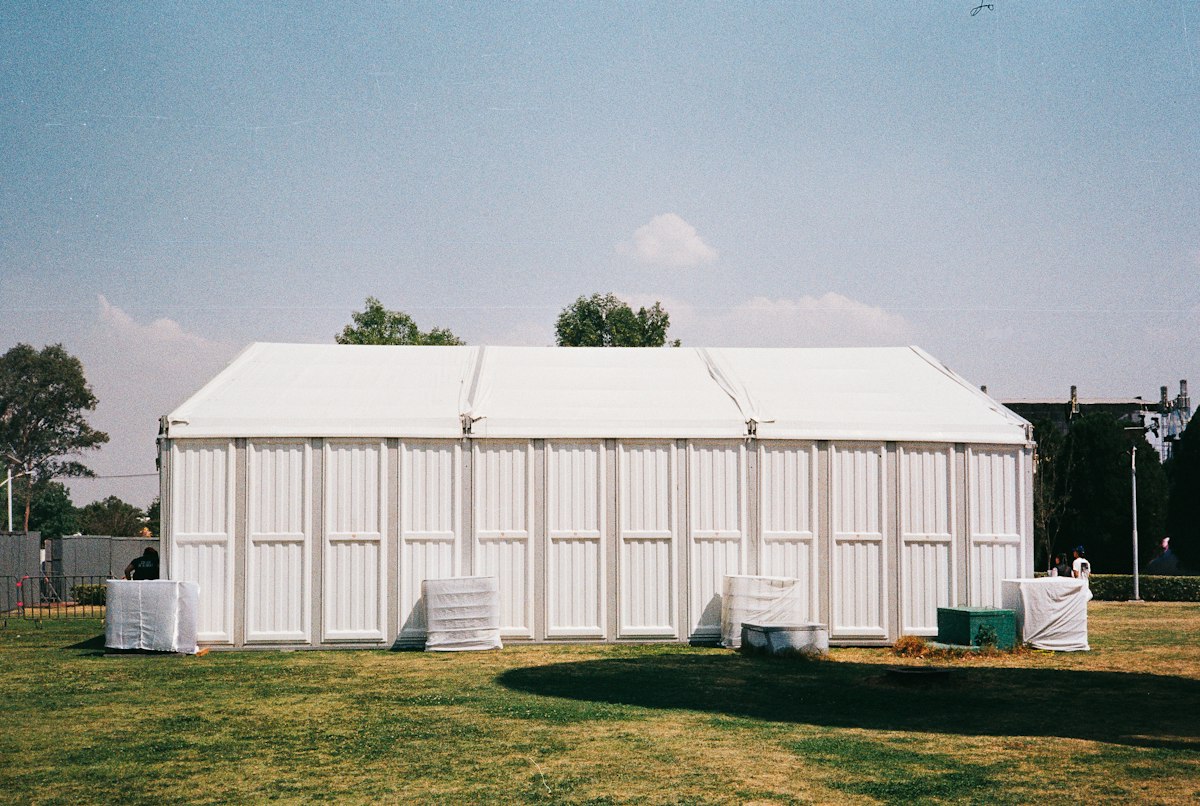
Tensioned-fabric structures use a galvanised steel frame covered by PVC or polyethylene membrane. They are the lightest and fastest to erect. A 500-square-metre tent warehouse can be standing within three to five days. They work well for temporary storage, overflow inventory and event logistics. However, they offer limited insulation and are not suited to environments that require climate control.
A high-quality tensioned-fabric warehouse with UV-treated PVC membrane lasts 15 to 20 years with periodic membrane replacement every 8 to 10 years.
Steel-frame modular warehouses are the most common choice for semi-permanent use. They consist of bolted portal frames with metal cladding panels. Because every connection is bolted rather than welded on site, the entire structure can be disassembled, transported and re-erected elsewhere. Assembly time for a 1 000-square-metre unit is typically two to four weeks. These warehouses accommodate mezzanines, loading docks and basic office partitions.
Container-based warehouses repurpose shipping containers. usually 12-metre (40-foot) high-cube units. joined side by side or stacked to create larger covered areas. They are inherently robust and secure, but floor area per unit is limited. Container setups suit smaller operations, tool storage and workshops rather than large-scale logistics.
The choice between these types depends on your time horizon, the loads you need to store, whether you need insulation and how likely you are to relocate. For businesses exploring warehouse fit-out options, modular steel frames give the closest experience to a conventional building.
Considering a dismountable industrial warehouse?
Browse our warehouse options — including modular and flexible solutions
How Much They Cost: Purchase, Rental and Comparison
Cost is usually the main reason businesses consider dismountable warehouses. The table below gives realistic ranges for the Portuguese market in 2026.
| Type | Purchase (euros per m²) | Monthly rental (euros per m²) | Assembly time |
|---|---|---|---|
| Tensioned-fabric | 40 – 65 | 3.00 – 5.00 | 3 – 7 days |
| Steel-frame modular | 70 – 120 | 4.50 – 7.00 | 2 – 4 weeks |
| Container-based | 55 – 90 | 3.50 – 6.00 | 1 – 2 weeks |
These figures include structure and basic assembly but exclude groundwork, electrical installation and any interior fit-out. Foundations for dismountable warehouses are simpler. often compacted gravel pads or shallow concrete strips. but they still represent 10 to 20 percent of the total project cost.
When comparing a dismountable warehouse with renting an existing permanent unit, add foundation preparation, utility connections and eventual disassembly costs to the dismountable option. A five-year total-cost comparison often shows dismountable structures breaking even with conventional rental at around year three.
By contrast, permanent steel-frame construction in the Lisbon Metropolitan Area costs 250 to 450 euros per square metre and takes four to eight months from permit to handover. For businesses that need space within weeks rather than months, or that face uncertainty about long-term location, the cost gap is significant.
Rental of dismountable units is less common but growing. Several suppliers now offer lease-to-own programmes where monthly payments over 36 to 60 months convert into ownership. For companies exploring affordable warehouses for rent, this can be a viable alternative when conventional stock is scarce or poorly located.
Advantages Over Permanent Construction
The appeal of dismountable warehouses goes beyond price. Several structural advantages make them attractive for specific business scenarios.
Speed of deployment. A company that signs a lease on vacant land can have a functional warehouse in two to six weeks. Permanent construction, including licensing, rarely delivers in under six months.
Relocatability. If a lease ends or the business moves, a bolted steel-frame warehouse can be disassembled and re-erected at a new site. Recovery rates vary. expect to reuse 80 to 90 percent of steel components and around 60 percent of cladding panels.
Dismountable warehouses retain 40 to 60 percent of their purchase value after five years if maintained properly. Permanent construction has no equivalent portability, and demolition costs can be substantial.
Scalability. Modular designs allow businesses to add bays as demand grows. A warehouse that starts at 500 square metres can expand to 1 500 square metres without rebuilding the original structure, provided the initial layout accounts for future extension.
Lower environmental impact. Because dismountable structures use less concrete and can be reused, their lifecycle carbon footprint is lower than conventional construction. For companies reporting on sustainability metrics, this matters increasingly.
Reduced capital commitment. Purchasing a dismountable warehouse ties up less capital than permanent construction. Combined with simpler foundations and shorter build times, the total financing requirement is typically 30 to 50 percent lower.
These advantages align well with the realities many businesses face in the Lisbon Metropolitan Area, where land availability and industrial licensing timelines often create bottlenecks.
Need Expert Help?
Durgesta assists you with all technical and legal documentation, condition negotiation, and personalised support
Limitations and When They Don't Make Sense
Dismountable warehouses are not a universal solution. Understanding their limitations prevents costly mistakes.
Insulation and climate control. Tensioned-fabric structures offer minimal thermal insulation. Even insulated steel-frame modules rarely match the thermal performance of a concrete-panel building. If your operation requires stable temperatures. for example, food storage or pharmaceutical warehousing. a dismountable unit will need significant additional investment in insulation and HVAC.
Most dismountable warehouses achieve lower fire-resistance ratings than permanent construction. Check that the structure meets the fire classification required for your intended use, especially if storing flammable goods.
Load capacity. Dismountable warehouses are designed for lighter roof and wall loads. Heavy overhead cranes, suspended conveyor systems or significant mezzanine loads may exceed the structural capacity of standard modular frames. Custom engineering is possible but erodes the cost advantage.
Perception and financing. Banks and insurers sometimes treat dismountable structures differently from permanent buildings. Obtaining a mortgage against a relocatable asset is harder, and insurance premiums may be higher. Some landlords prohibit dismountable structures on leased land.
Lifespan under heavy use. While a well-maintained modular warehouse can last 25 to 30 years, the practical lifespan in demanding environments. coastal salt air, heavy forklift traffic, chemical exposure. may be shorter. Corrosion protection and regular maintenance are essential.
Aesthetics and planning restrictions. Some municipalities impose design standards on industrial zones that dismountable structures may not meet. Before committing, verify local planning rules.
For operations that need heavy-duty industrial space for a decade or more, permanent construction or renting an existing unit in areas like Loures will usually be more practical and cost-effective in the long run.
Licensing in Portugal: What You Need
Portuguese law does not exempt dismountable warehouses from licensing simply because they are not permanent. The requirements depend on the structure type, its intended duration and the municipality.
Prior communication (comunicacao previa) may suffice for temporary structures that will remain in place for less than 120 days. This is common for event-related tent warehouses.
Building permit (licenca de construcao) is typically required for any structure that remains in place for more than 120 days or that connects to public utilities. Even a bolted steel-frame warehouse on private industrial land usually needs a permit.
Licensing timelines vary significantly between municipalities. In the Lisbon Metropolitan Area, expect 30 to 90 days for prior communication and 3 to 6 months for a full building permit. Some councils have fast-track processes for industrial zones with approved master plans.
Key documents you will need:
- Architectural project signed by a qualified technician
- Structural stability report
- Fire safety project (depending on risk category)
- Proof of land ownership or landlord authorisation
- Location plan and site layout
The fact that a warehouse is dismountable does not waive the obligation to comply with the General Building Regulations (RGEU) or the fire safety regime (SCIE). Working with an engineer or architect familiar with modular construction in your target municipality saves time and avoids rejected applications.
For a broader overview of the licensing landscape, the guide to industrial licensing in Portugal covers the full process.
Frequently Asked Questions
Tensioned-fabric structures take three to seven days. Steel-frame modular warehouses take two to four weeks. Container-based setups fall in between at one to two weeks. These timelines assume the foundation is already prepared.
Yes. Steel-frame modular warehouses are designed for disassembly and re-erection. Expect to recover 80 to 90 percent of steel components. Tensioned-fabric structures are also relocatable. Container-based setups move most easily since each container is an independent unit.
In most cases, yes. Structures remaining in place for more than 120 days or connected to public utilities generally require a building permit. Temporary structures under 120 days may qualify for prior communication only. Rules vary by municipality.
Dismountable warehouses cost 40 to 120 euros per square metre depending on type. Permanent steel-frame construction in the Lisbon Metropolitan Area costs 250 to 450 euros per square metre. The dismountable option also requires simpler foundations and shorter build times.
A steel-frame modular warehouse lasts 25 to 30 years with proper maintenance. Tensioned-fabric structures last 15 to 20 years with periodic membrane replacement. Actual lifespan depends on environmental conditions and usage intensity.
Standard dismountable warehouses offer limited insulation. They can be adapted for cold storage with added insulation panels and HVAC systems, but the additional investment narrows the cost advantage over purpose-built refrigerated facilities.
Traditional mortgage financing is difficult because the structure is relocatable. However, equipment financing and leasing arrangements are available. Some suppliers offer lease-to-own programmes over 36 to 60 months that do not require bank involvement.
Looking for a Warehouse to Rent?
We have industrial warehouses available for lease in Greater Lisbon. Competitive prices and flexible contracts