Reverse Logistics: How to Manage Returns in Your Warehouse
Practical guide to reverse logistics: warehouse layout for returns, A/B/C grading system, processing costs and consumer rights in Portugal.
If you sell online and ship from a warehouse in the Lisbon Metropolitan Area, returns are not a side issue. they are a core logistics operation. Industry data shows that e-commerce return rates in Portugal sit between 20 and 30 percent for fashion and 8 to 12 percent for electronics, which means a significant share of outbound volume eventually travels back through your doors.
Reverse logistics is the structured process of receiving, inspecting, grading and routing those returned goods. Done well, it recovers value; done badly, it becomes a hidden cost centre that drains profitability. This guide covers the legal framework, warehouse layout, grading methodology, real costs and practical tactics to keep returns under control.
What the Law Says: Consumer Rights in Portugal
Portuguese consumer protection follows EU Directive 2011/83/EU, transposed into national law through Decree-Law 24/2014. The key rules every warehouse operator should know are straightforward.
For distance sales. online, phone or catalogue. the consumer has 14 calendar days from delivery to withdraw without giving a reason. The seller must refund the full amount, including original shipping, within 14 days of receiving the returned goods. If the seller did not inform the buyer about the right of withdrawal, the return window extends to 12 months.
Hygiene-sensitive items such as cosmetics, underwear and earphones may be excluded from the right of withdrawal once the seal is broken. Make sure your product pages clearly state this before checkout.
For in-store purchases, there is no legal obligation to accept returns unless the product is defective. However, many retailers offer voluntary return policies as a competitive advantage. For defective goods, the legal guarantee period is three years under Decree-Law 84/2021, during which the consumer may request repair, replacement or refund.
Understanding these rules matters for warehouse planning because they define the minimum volume of returns you must be prepared to handle. and the speed at which you need to process them.
Need a warehouse for managing returns?
View warehouses with the space and access suited for reverse logistics
Organising the Warehouse for Returns
The biggest mistake companies make is treating returns as an afterthought, processing them on the same benches and in the same aisles used for outbound orders. This creates bottlenecks, slows down picking for new orders and increases the risk of a returned item accidentally being reshipped without inspection.
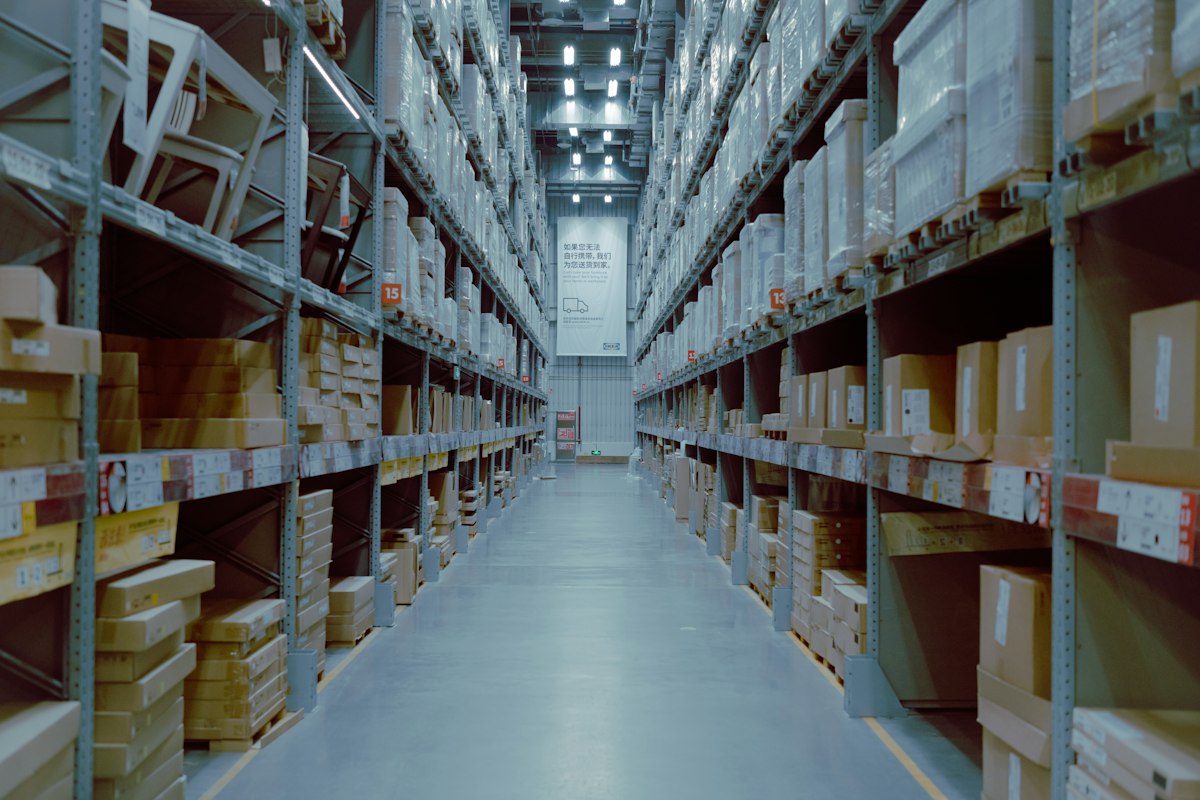
A properly set up e-commerce warehouse dedicates a clearly marked zone exclusively for reverse logistics. The ideal layout follows a linear flow with four stations.
Receiving dock. Returned parcels arrive and are scanned against the original order. The system logs the return reason code. wrong size, damaged, changed mind. and prints a routing slip.
Inspection bench. Staff open the parcel, verify contents against the slip, and check the product for damage, missing parts or signs of use. This is where the grading decision happens.
Sorting area. Graded items are placed into bins or trolleys labelled by destination: restock, refurbish, liquidate or dispose.
Restock lane. Grade-A items flow back into pick locations. Grade-B and Grade-C items move to secondary storage or outbound staging for liquidation channels.
Allocate roughly 10 to 15 percent of total warehouse floor area to returns processing. For a 500-square-metre facility, that means 50 to 75 square metres. Use our guide on how to calculate warehouse area to size the zone correctly.

Keeping the returns zone close to the receiving dock but physically separated from outbound staging is critical. Cross-contamination. where uninspected returns mix with ready-to-ship stock. is one of the fastest ways to generate customer complaints and negative reviews.
Grading System: Grade A, B and C
Not every returned product is equal. A structured grading system removes subjectivity from the inspection process and speeds up decision-making. The most widely used framework in European e-commerce logistics splits returns into three grades.
Grade A. Like New. The product is unopened or opened but in perfect condition with all original packaging, tags and accessories. It can go straight back to pick locations and be sold as new. Typical recovery: 100 percent of retail price.
Grade B. Good. The product has been opened and may show minor signs of handling. a scuffed box, a missing outer sleeve. but the item itself is fully functional. It can be resold as "open box" or "like new" on secondary channels. Typical recovery: 50 to 80 percent of retail price.
Grade C. Damaged or Incomplete. The product is defective, significantly worn or missing essential components. Options include repair, parts harvesting, recycling or disposal. Typical recovery: 0 to 30 percent of retail price.
Across general e-commerce in Portugal, roughly 55 to 65 percent of returns fall into Grade A, 20 to 30 percent into Grade B and 10 to 15 percent into Grade C. If your Grade C share exceeds 20 percent, investigate packaging quality and carrier handling.
Documenting the grade with photos at the inspection bench protects the business in disputes and builds a data set you can analyse to spot patterns. for example, a specific product that consistently returns as Grade C may have a design or packaging flaw worth addressing at the source.
Good inventory management practices require that graded returns update stock records in real time. A Grade-A item that sits uninventoried for a week is a week of lost sales potential.
Need Expert Help?
Durgesta assists you with all technical and legal documentation, condition negotiation, and personalised support
How Much Do Returns Cost
Returns carry both visible and hidden costs. Understanding the full picture is essential for pricing strategy and for justifying investment in reverse logistics infrastructure.
Direct costs per return in Portugal typically break down as follows:
| Cost Component | Estimated Range |
|---|---|
| Return shipping (carrier) | 2.50 to 6.00 euros |
| Receiving and inspection labour | 1.50 to 3.00 euros |
| Repackaging materials | 0.50 to 1.50 euros |
| System processing and customer service | 0.80 to 2.00 euros |
| Disposal or write-off (Grade C only) | 1.00 to 5.00 euros |
Total processing cost per return typically lands between 5 and 15 euros, depending on product category, warehouse efficiency and whether the item can be restocked.
Hidden costs are harder to quantify but often larger: tied-up working capital while items sit unprocessed, markdowns on Grade-B stock, customer churn from slow refunds, and the opportunity cost of warehouse space occupied by returns instead of fast-moving inventory.
For a mid-sized e-commerce operation shipping 5 000 orders per month with a 20 percent return rate, the annual reverse logistics bill can exceed 60 000 euros. Choosing the right logistics warehouse with efficient layout and competitive rents in the Lisbon Metropolitan Area is one of the most effective ways to keep that figure in check.
Portuguese law requires refunds within 14 days, but best practice is faster. Sellers who process refunds within 48 hours of receiving the return report significantly higher repeat-purchase rates.
How to Reduce Your Return Rate
The cheapest return is the one that never happens. While some returns are inevitable. a customer simply changing their mind. a large share is preventable with upstream improvements.
Improve product information. Detailed descriptions, multiple high-resolution photos, 360-degree views and video reduce "not as expected" returns. Include exact dimensions, materials and weight.
Offer accurate sizing tools. For fashion and footwear, interactive size guides or fit-finder questionnaires can cut size-related returns by 25 to 40 percent.
Strengthen quality control before dispatch. A 30-second visual check at the packing station catches defects, wrong items and missing accessories before they leave the building. The cost of catching an error internally is a fraction of processing a return.
Use robust packaging. Damage in transit accounts for 10 to 20 percent of returns in some categories. Investing in better inner packaging. foam inserts, corner protectors, double-walled boxes. pays for itself quickly.
Analyse return-reason data. Track every return code and review the data monthly. If one SKU generates three times the average return rate, the problem is almost certainly with the product or its listing, not the customer.
In fashion e-commerce, many customers deliberately order multiple sizes and return the ones that do not fit. Clear sizing guides and a generous but well-communicated exchange policy help discourage this costly behaviour.
Frequently Asked Questions
Reverse logistics is the process of moving goods from the customer back to the seller or manufacturer. It covers return shipping, receiving, inspection, grading, restocking, refurbishment, recycling and disposal. The goal is to recover as much value as possible from returned products while complying with consumer protection laws.
Under Decree-Law 24/2014, customers have 14 calendar days from the date of delivery to return an online purchase without giving a reason. If the seller failed to inform the buyer about the right of withdrawal, the window extends to 12 months.
Grade A means the item is in like-new condition and can be restocked immediately. Grade B means the item is functional but has cosmetic imperfections or damaged packaging, so it is typically resold on secondary channels at a discount. Grade C means the item is defective or incomplete and may need repair, parts harvesting or disposal.
The total cost per return typically ranges from 5 to 15 euros. This includes return shipping at 2.50 to 6 euros, inspection labour at 1.50 to 3 euros, repackaging at 0.50 to 1.50 euros and system processing at around 0.80 to 2 euros. Grade C items add disposal costs of 1 to 5 euros.
A common benchmark is 10 to 15 percent of total warehouse floor area. For a 500-square-metre facility that means reserving 50 to 75 square metres for a receiving dock, inspection bench, sorting area and restock lane.
Return rates vary by category. Fashion and footwear see 20 to 30 percent returns, electronics around 8 to 12 percent, and home goods roughly 5 to 10 percent. The overall average across all categories sits at approximately 15 to 20 percent.
Focus on better product descriptions with accurate photos and measurements, offer interactive sizing guides for fashion items, run quality-control checks before dispatch, use robust packaging to prevent transit damage and analyse return-reason data monthly to identify problematic products or listings.
Want to Buy an Industrial Warehouse?
Discover our warehouses for sale in Greater Lisbon. A solid investment with guaranteed returns