Trends for Industrial Warehouses in Portugal (2026)
Only 2.76% of spaces available in the LMA, rents at record highs and 360,000 m² in the pipeline. 7 trends shaping Portugal's market.
The industrial warehouse market in Portugal is undergoing an unprecedented transformation. With less than 3% of spaces available and rents at historic highs, the supply shortage is forcing companies to rethink location strategies, accept longer lease terms and compete for spaces that, just a few years ago, would sit empty for months.
This article examines the 7 trends shaping the sector in 2026: from the impact of e-commerce and nearshoring to the entry of data centers into the industrial real estate equation. If you are looking for warehouse space or planning a relocation, these are the forces that will shape your decision.
Market Overview: Supply Shortage and Rising Rents
Total logistics stock in Portugal reached 4.9 million m² in 2025, but demand continues to far outstrip available supply (Savills, 2026). Nationally, only 3.02% of spaces are available, with the Lisbon Metropolitan Area even tighter at 2.76%.
| Indicator | Value (2025) |
|---|---|
| Total stock | 4.9 million m² |
| National availability | 3.02% |
| LMA availability | 2.76% |
| Porto Metro Area availability | 3.71% |
| Prime rent Lisbon | €7.00/m²/month |
| Prime rent Porto | €5.50/m²/month |
Prime rents in Lisbon have reached €7.00/m²/month, a 40% increase since 2019 (Cushman & Wakefield, 2025). In Porto, growth has been even steeper, with rents reaching €5.50/m²/month.
Annual take-up fell 36% to 492,049 m² in 2025, but the decline does not reflect weaker demand. It reflects a lack of available product. Many companies cannot lease because there is simply no space.
Investment in industrial and logistics real estate in Portugal totalled €310 million in 2025, a 114% increase year-on-year (Savills, 2026). For those seeking space in the LMA, the estimated deficit stands at around 1 million m², meaning that even with pipeline projects, upward pressure on rents is expected to persist.
New Developments: Who Is Building and Where
The response to the shortage is coming, but at an insufficient pace. The logistics pipeline in the Lisbon Metropolitan Area includes more than 360,000 m² across around 14 projects over the next two years, of which only 34% is pre-leased (Savills, 2026). In the Porto Metro Area, the pipeline adds 175,000 m² through 2029.
The main international developers are investing heavily in Portugal:
- Panattoni: €120 million invested in the Iberian Peninsula, including Panattoni Park Porto Valongo (75,000 m²), Panattoni Park Lisbon-City in Loures (52,591 m²) and Panattoni Park Santarém (35,700 m²), with SPAR as anchor tenant (Idealista, 2025).
- Logicor: Quinta do Barrão hub in Montijo (37,000 m² with BREEAM Excellent certification), plus projects in Canelas, Sandim, Póvoa de Santa Iria and Alverca (Logicor, 2025).
- Merlin Properties: Logistics Platform Lisbon North in Castanheira do Ribatejo.
- Blackstone: projects in Santo Tirso, Malveira and Alcochete (Hipersuper, 2026).
With 34% of the pipeline already pre-leased, the best spaces are being reserved before construction is complete. If you expect to need space within the next 12-18 months, start your search now.
For those looking in the Loures and Oeiras areas, Durgesta has warehouses in the Lisbon Metropolitan Area ranging from 750 m² to 14,000 m², in locations such as Sacavém, Prior Velho, Carnaxide and Barcarena.
Looking for a modern industrial warehouse?
Explore warehouses with the features that define the 2026 market
E-commerce: the Engine of Logistics Demand
E-commerce in Portugal reached €12.9 billion in 2025, a 6.7% increase year-on-year (ECO, 2025). With 5.5 million Portuguese people shopping online (75% of adults), the 2026 projection points to a market above €13.5 billion.
This growth has direct consequences for the warehouse market:
- Micro-fulfillment centers: smaller spaces (500-2,000 m²) in urban areas for same-day delivery.
- Last-mile hubs: warehouses close to consumption centers, such as Loures, Montijo and the South Bank.
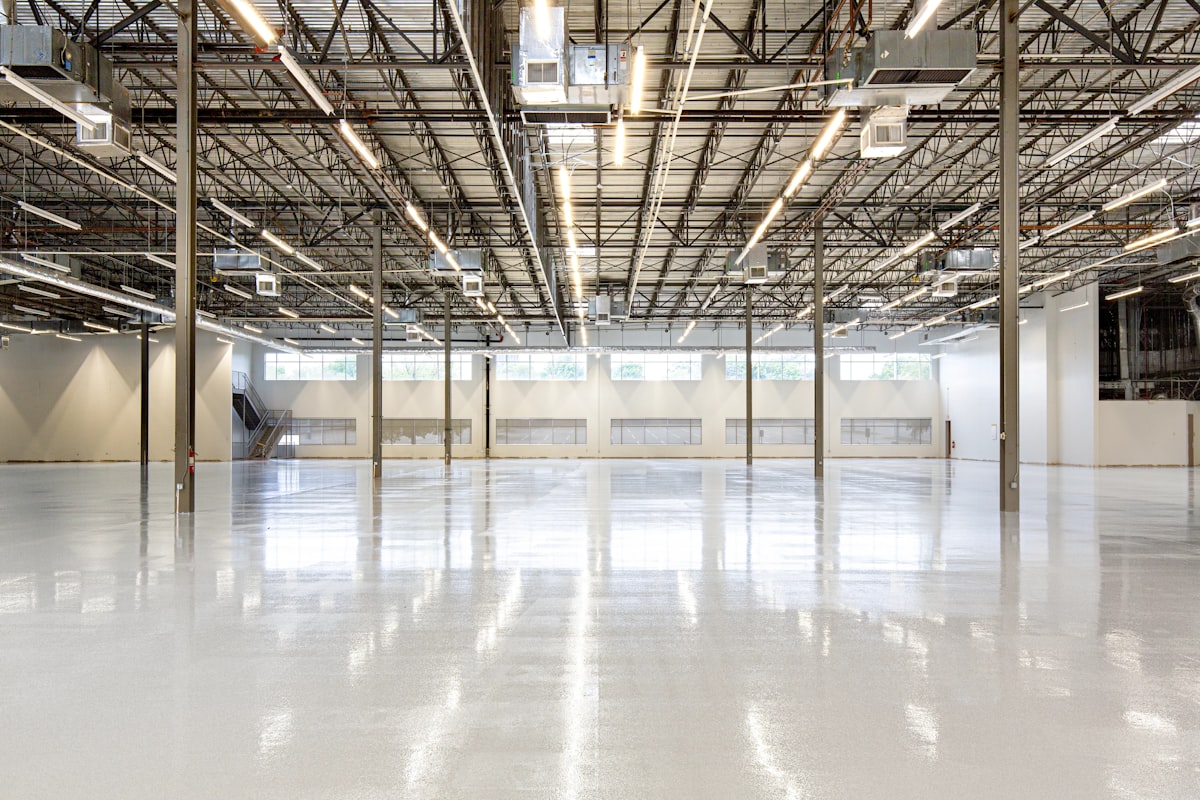
- Operational requirements: elevated loading docks, minimum 10-metre clear height, bays for vans as well as trucks.
The case of SPAR, which took up 35,700 m² at Panattoni Park Santarém (Idealista, 2026), illustrates how food retail is investing in modern logistics infrastructure to support omnichannel operations.
If you operate in e-commerce and are looking for space, see our guide to choosing an e-commerce warehouse in the LMA.
E-commerce favours warehouses with strong road connectivity, multiple loading docks and proximity to urban centres. Areas such as Sacavém, Prior Velho and Loures benefit from this trend due to their proximity to the Airport and the A1/A8/CRIL motorway axes.
Nearshoring: Portugal as a European Logistics Hub
Nearshoring is transforming Portugal into a preferred destination for European logistics and industrial operations. In 2025, 56% of European companies invested in nearshoring, up from 42% the previous year (Cushman & Wakefield, 2025).
Portugal benefits from concrete competitive advantages:
- Operating costs: 30-40% lower than France and the UK.
- Geographic location: gateway to Europe, Africa and the Americas, with deep-water ports in Sines and Lisbon.
- Foreign investment: grew 13% in 2024.
- Renewable energy: the government has committed €60 billion to renewables, attracting energy-intensive industry.

The impact on industrial space demand is twofold: beyond logistics warehouses for distribution, nearshoring generates demand for production space (metalworking, automotive components, electronics). To understand how location influences the choice, our article on how to choose the right location covers the key criteria.
Automation and Technology in Warehouses
The shortage of labour and pressure to reduce operating costs are accelerating technology adoption in Portuguese warehouses. The global warehouse robotics market is growing at an annual rate of 17.5% and Portugal, although behind Nordic and German markets, is catching up.
The technologies seeing greatest adoption in Portugal:
- WMS (Warehouse Management Systems): already present in most logistics warehouses above 5,000 m². Enables real-time stock management, picking optimisation and integration with client systems.
- AGVs and AMRs: autonomous guided vehicles for internal movement. Especially relevant in high-volume operations and night shifts.
- AS/RS (Automated Storage/Retrieval Systems): automated vertical storage systems. They multiply storage capacity per square metre.
- AI and machine learning: applied to demand forecasting, picking route optimisation and predictive equipment maintenance.
Automation requires warehouses with levelled flooring (tolerance below 2 mm/m), high electrical capacity (minimum 100 kVA for AGVs) and clear height above 10 metres for AS/RS. Verify these specifications before signing a lease.
Automation changes the specifications companies look for in a warehouse. Clear height, floor load capacity and installed electrical power become decisive criteria. To understand how to calculate the area your operation needs, see our warehouse area calculation guide.
Need Expert Help?
Durgesta assists you with all technical and legal documentation, condition negotiation, and personalised support
Sustainability and ESG Certifications
BREEAM Excellent certification is becoming the standard for new warehouses in Portugal. Projects such as Panattoni Park Santarém and Logicor Quinta do Barrão already include this certification from the outset, and tenants are beginning to require it.
The numbers justify the investment:
| Benefit | Impact |
|---|---|
| Energy savings | 20-30% |
| Water savings | Up to 50% |
| Rent premium | Up to 20% compared to non-certified |
The EU Taxonomy and the CSRD (Corporate Sustainability Reporting Directive) are creating additional pressure: large companies need to report on the environmental performance of their facilities, including leased warehouses. This means that even for tenants, operating in a certified building can simplify compliance reporting obligations.
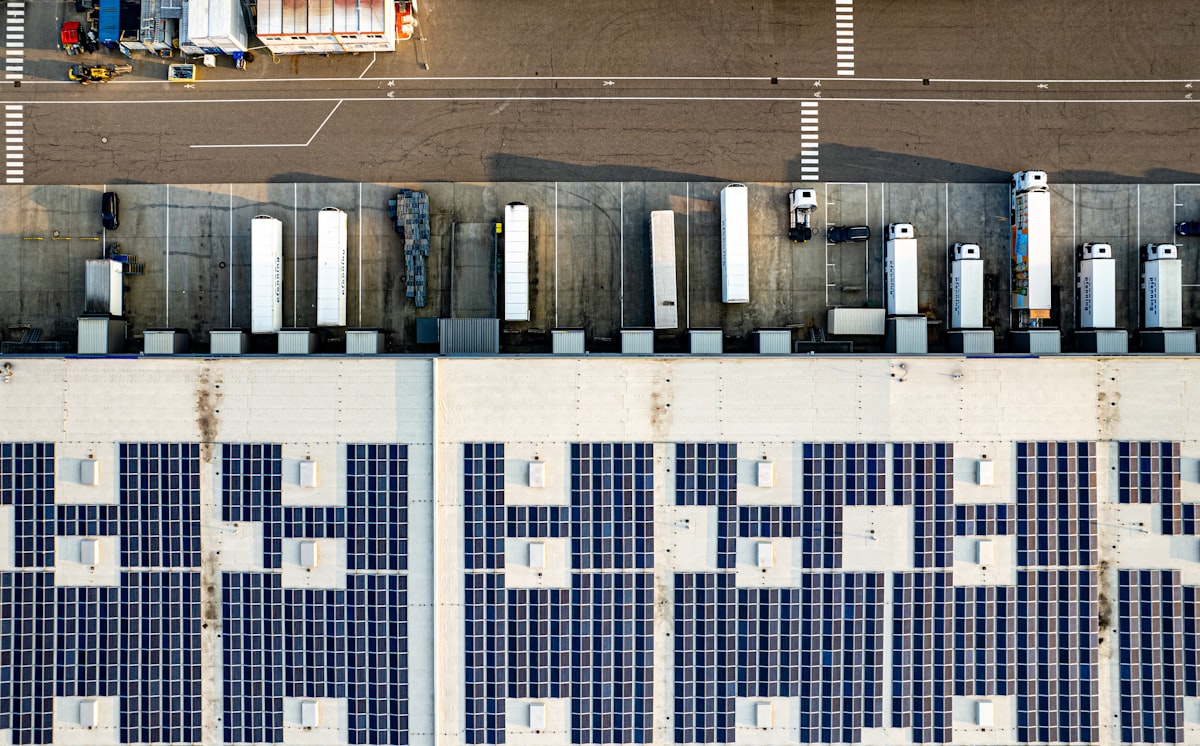
Warehouses with photovoltaic panels under the self-consumption regime (UPAC) can significantly reduce energy bills. For more on this topic, see our article on optimising industrial electricity costs and the guide on Portugal 2030 incentives, which includes grants of up to 85% for energy efficiency projects.
If your company reports under the CSRD, operating in a BREEAM or LEED-certified warehouse simplifies environmental data collection and demonstrates commitment to decarbonisation to clients and investors.
Data Centers: a New Frontier for Industrial Real Estate
Portugal is preparing to receive more than €12 billion in data center investment over the next 5 years, of which 80% will be dedicated to artificial intelligence infrastructure (ECO, 2025). The Start Campus/Microsoft project in Sines, valued at €8.5 billion, is the largest.
Other notable projects include Equinix (Lisbon), Atlas Edge (Carnaxide) and new facilities in Castanheira do Ribatejo and Alcochete. The projected GDP impact is €3.7 billion by 2031.
For the warehouse market, this trend has significant side effects:
- Competition for industrial land: data centers seek the same plots as logistics warehouses, with access to power and fibre optics.
- Pressure on the electrical grid: the power demanded by data centers can limit capacity available for warehouses in the same area.
- Rising value of peripheral locations: sites such as Sines, Castanheira and Montijo are gaining attractiveness.
Abundant and competitive renewable energy, transatlantic submarine cables, seismic stability and a mild climate (reducing cooling costs). These factors explain why giants such as Microsoft, Equinix and Digital Realty have chosen Portugal.
2026-2027 Outlook: What to Expect
CBRE identifies the Iberian Peninsula as one of the European markets with the greatest potential for prime rent growth in 2026 (CBRE, 2026). For Portugal, the outlook points to:
- Rents: will continue to rise, although at a more moderate pace than the last 3 years. New stock entering the market could stabilise prime values at €7.00-€7.50/m²/month in Lisbon.
- Supply: the 360,000 m² pipeline in the LMA addresses part of the shortage, but 59% is speculative (no guaranteed tenant), which means risk of delays.
- Demand: structurally solid, driven by e-commerce, nearshoring and post-pandemic supply chain reorganisation. More selective in terms of quality and certifications.
- Risks: high construction costs, long licensing timelines (12-18 months in some municipalities) and regulatory uncertainty may delay projects.
For companies looking for a warehouse in the next 12 months, the message is clear: the negotiation window is narrower than ever. Supply will improve, but the best spaces will continue to be absorbed quickly, especially those combining good location, modern specifications and ESG certification.
The complete guide to renting a warehouse in Lisbon and the price table by zone help you compare options and prepare your decision.
Frequently Asked Questions
Nationally, only 3.02% of spaces are available. In the Lisbon Metropolitan Area the figure is 2.76% and in the Porto Metro Area 3.71%, according to Savills data for 2025.
Prime rents in Lisbon reach €7.00/m²/month in 2025, a 40% increase since 2019. For non-prime spaces, values range between €4.50 and €6.50/m²/month, depending on the zone and specifications.
The LMA pipeline includes more than 360,000 m² across around 14 projects over the next 2 years. The main developers are Panattoni, Logicor, Merlin Properties and Blackstone, with projects in Loures, Montijo, Alverca, Castanheira do Ribatejo and Alcochete.
Portuguese e-commerce is worth €12.9 billion and growing at 6.7% annually. It generates demand for urban logistics spaces for fast delivery, such as micro-fulfillment centers and last-mile hubs, especially in areas like Loures, Montijo and the South Bank.
Nearshoring is the relocation of operations to countries closer to the end market. Portugal attracts European companies with operating costs 30-40% lower than France and the UK. In 2025, 56% of European companies invested in nearshoring, generating additional demand for industrial and logistics space.
Yes. CBRE identifies the Iberian Peninsula as one of the markets with the highest expected prime rent growth in Europe. New stock may moderate the pace of increase, but the structural supply shortage maintains upward pressure on values.
BREEAM is an environmental certification system for buildings. Warehouses certified with BREEAM Excellent offer energy savings of 20-30% and water savings of up to 50%. They can charge a rent premium of up to 20%, but compensate with lower operating costs.
Looking for a Warehouse to Rent?
We have industrial warehouses available for lease in Greater Lisbon. Competitive prices and flexible contracts